This guide covers the winter motorcycle gear that makes the difference, from base layers and jackets to gloves, balaclavas, boots and rain layers. It explains:
- the materials behind that gear;
- how needs differ between riding regions, from Canada and the UK to the Middle East, Asia and Australia;
- what dealers and brands should consider when building a winter range.
Why Riding in the Cold Feels So Much Colder
Three things make winter riding harder than winter walking:
- Wind chill. Moving air removes heat far faster than still air, and on a motorcycle you create that wind yourself.
- Low activity. Riding is mostly static, so your body produces little heat of its own.
- Moisture. Rain, spray and sweat all draw heat away, and damp layers lose much of their warmth.
Good cold weather motorcycle gear tackles all three. It blocks wind, holds warm air close to the body, and keeps moisture out while letting sweat escape.
The Layering System Behind Cold Weather Riding Gear
Most riders stay warmer in several thinner layers than in one heavy one. Layers trap air, and you can adjust them as conditions change.
Base Layer
A close-fitting, moisture-wicking layer worn against the skin moves sweat away so it doesn’t chill you. Synthetic or merino fabrics usually work better than cotton, which holds moisture.
Mid Layer
An insulating layer, such as fleece or a thin insulated jacket, traps warm air. Many riding jackets and pants include a removable thermal liner that does this job.
Outer Layer
The outer shell blocks wind and rain. It also carries the abrasion resistance and armor pockets that make it motorcycle gear rather than outdoor clothing. Make sure the outer layer still fits comfortably over everything underneath. If bulky layers push the armor out of position, it won’t sit where it should.
Our layering guide to staying warm on a motorcycle goes through each layer in detail.
Winter Motorcycle Clothing From Head to Toe
Jackets
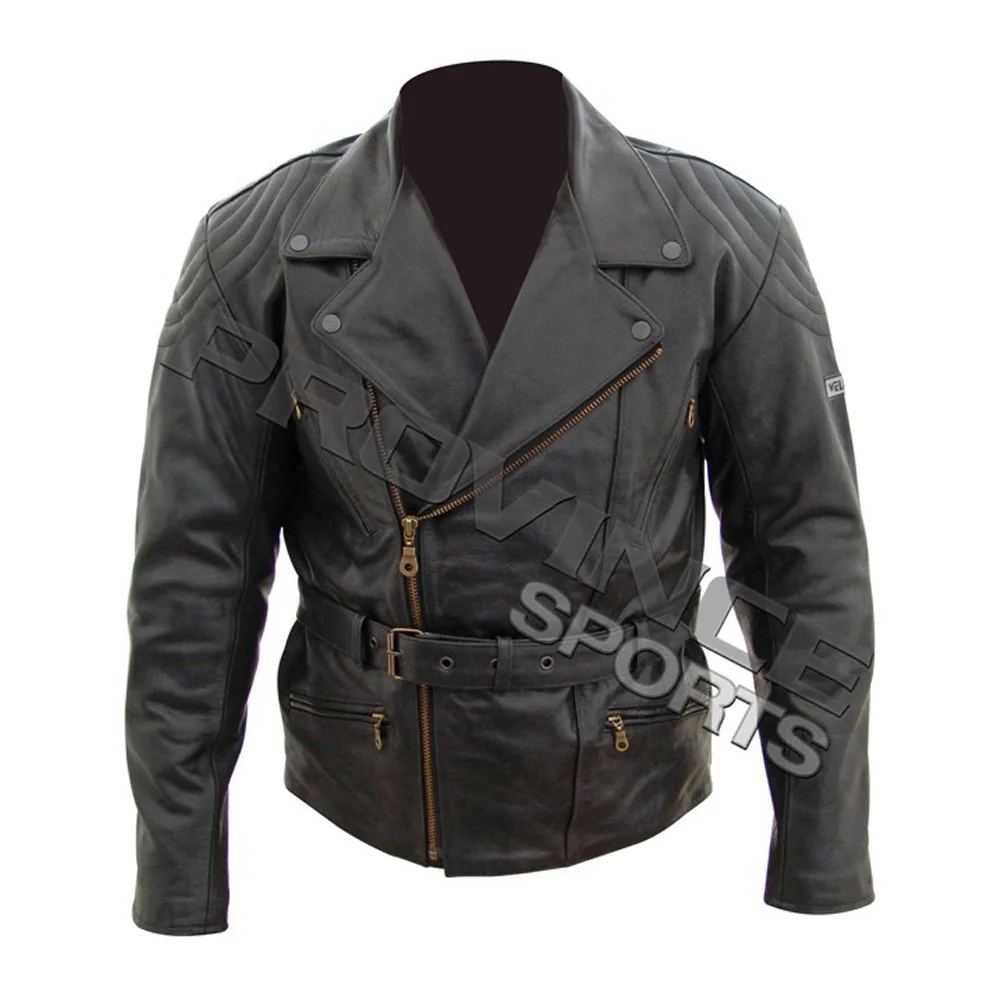
A winter riding jacket should have:
- a windproof outer;
- a removable thermal liner;
- a high collar;
- adjustable cuffs;
- a waist adjuster to stop cold air entering at the bottom.
Touring-style motorcycle jackets with longer backs help when you lean forward. Check whether armor is included and certified, or whether the jacket only has pockets for it.
Pants
Your legs take the full force of the wind. Look for textile or leather motorcycle trousers with:
- a thermal liner, or room for a base layer;
- a waterproof layer if you ride in wet conditions;
- a zip that connects them to your jacket, so the gap at the waist stays closed.
Riding in jeans alone leaves you colder and less protected.
Gloves
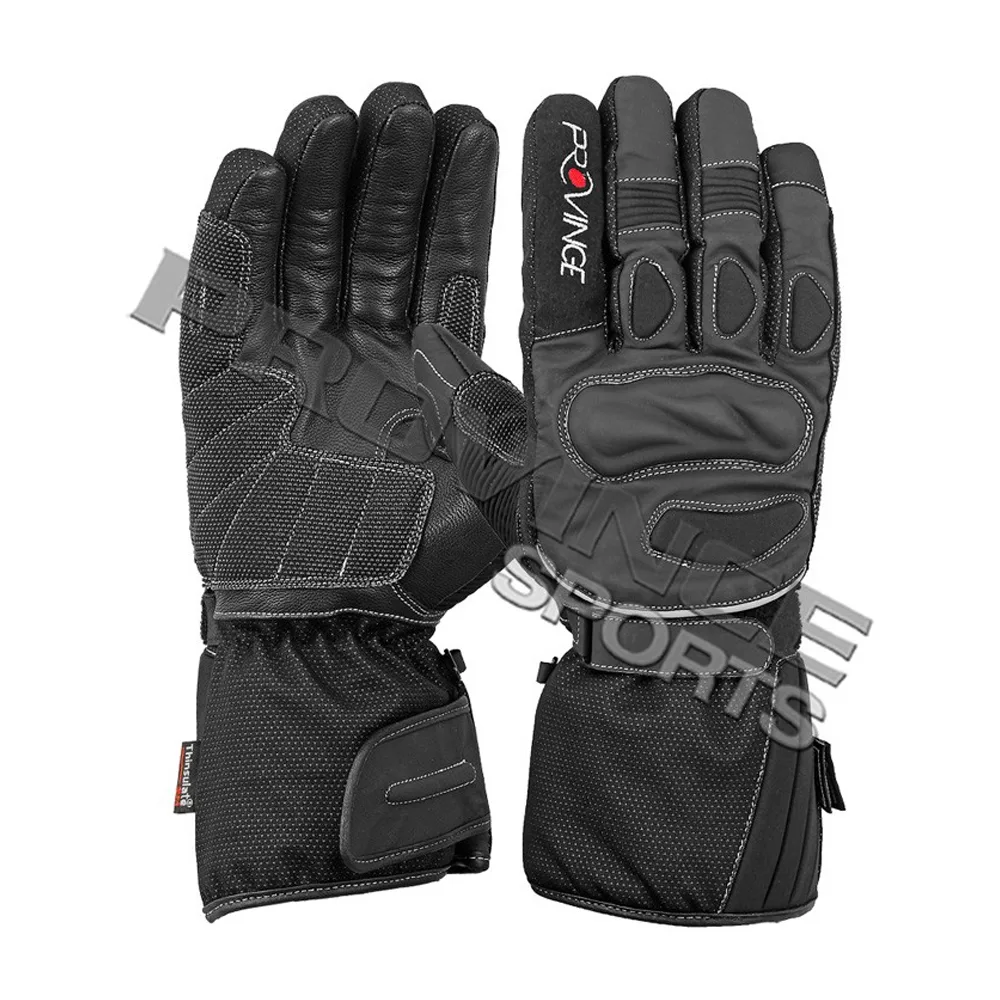
Cold hands are the most common winter complaint, and they affect your control of the clutch, throttle and brakes. Winter riding gloves should balance warmth with feel. Look for:
- an insulated lining that doesn’t make the glove too bulky to work the levers;
- a waterproof breathable insert if you ride in rain;
- a long gauntlet cuff that closes over the jacket sleeve;
- pre-curved fingers and a grippy palm.
Fit matters more than people expect. A glove that is too tight restricts blood flow and feels colder, even with good insulation.
For more ways to fight cold fingers, see how to keep your hands warm on a motorcycle.
Thinsulate Gloves and Other Insulated Gloves
Riders often search for Thinsulate gloves specifically. Thinsulate is a 3M brand of synthetic insulation, and it’s one of several used in gloves. What matters most is:
- how much insulation there is;
- where it sits in the glove;
- whether the glove also stops wind and water.
A glove with a recognized insulation brand but no wind barrier can still feel cold at speed.
Motorcycle Hand Warmers and Heated Gear
When gloves alone aren’t enough, motorcycle hand warmers fill the gap:
- Heated grips warm the palms through the handlebar and are fitted to the bike.
- Heated gloves or glove liners are powered by the bike or by batteries and warm the fingers directly.
- Handlebar muffs cover the hands and controls to block wind, mostly on commuter and touring bikes.
- Chemical warmer packs are cheap and disposable but bulky inside a riding glove.
Hand guards also help by keeping wind off your knuckles.
Our explainer on what Thinsulate is covers how it works in riding gloves.
Head and Neck
Motorcycle Balaclava
A thin motorcycle balaclava worn under the helmet covers the head, ears and neck, and fills the gaps that let cold air in around the helmet. Choose a thin, stretchy fabric so the helmet still fits correctly: a balaclava that is too thick can loosen or misalign it. Motorcycle storm caps and balaclavas come in both thermal and lighter versions.
If you’re deciding between the two, read our comparison of balaclava vs neck gaiter for motorcycle riding.
Neck Warmers
The gap between helmet and collar is where much of the cold gets in. A tube or bib-style motorcycle neck warmer seals that gap and is easy to remove at a stop. Some riders wear one with a balaclava; others prefer one or the other.
Cold weather also brings visor fogging. Use an anti-fog insert or treatment, and make sure face coverings direct your breath downward rather than up into the visor.
Boots and Socks
Insulated, waterproof motorcycle boots with grippy soles keep your feet warm and help on slippery ground at stops. Wear warm, moisture-wicking socks, but don’t layer so many that the boots become tight. Tight boots restrict circulation and make your feet colder.
The Lower Back
Cold air often gets in between jacket and pants when you lean forward. A windproof kidney belt adds a layer over this area. Our article on whether kidney belts work explains what they can and can’t do.
Rain Layers
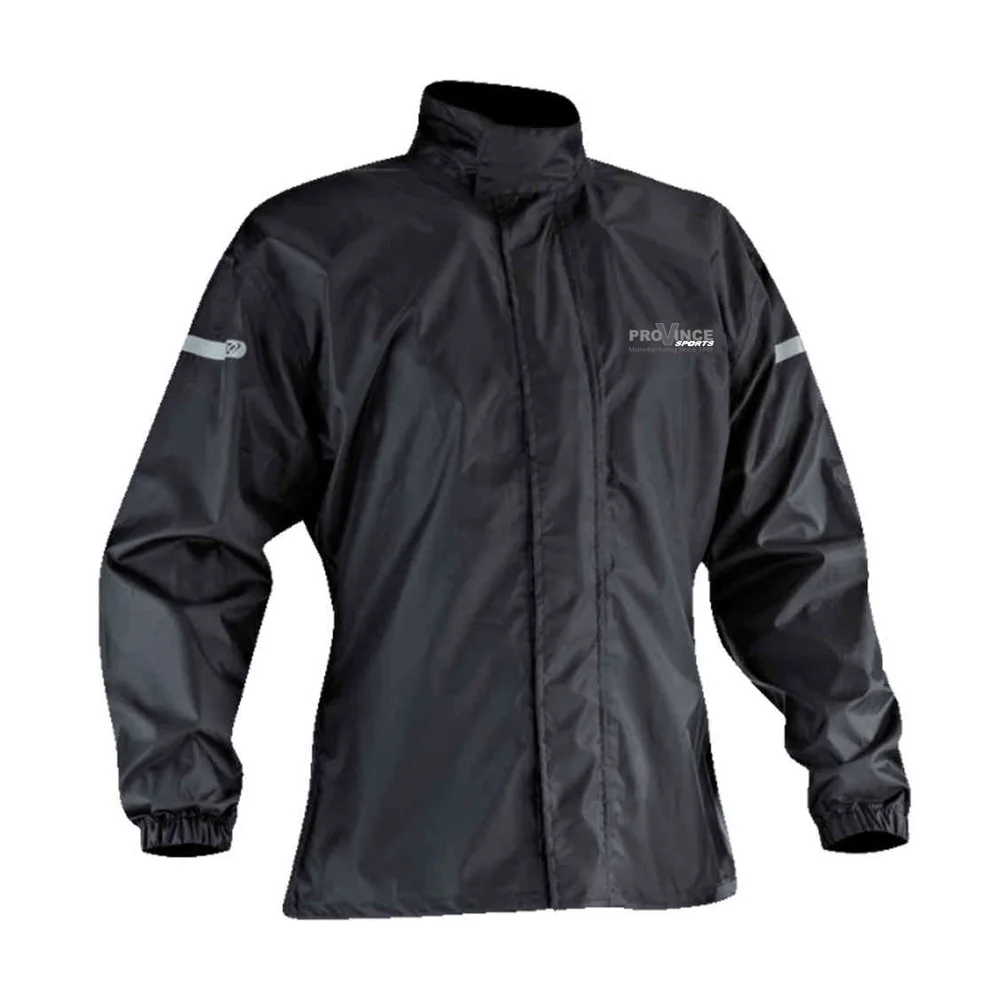
Winter rain makes cold riding far worse. If your main gear isn’t waterproof, carry motorcycle rain protectors, such as an over-suit or a rain jacket and pants, sized to fit over your riding gear.
Waterproof Breathable Fabric and Insulation Explained
Waterproof Breathable Fabric
A waterproof breathable fabric keeps rain out while letting some water vapor from sweat escape. It usually relies on a membrane, which is either bonded into the fabric or hung as a separate liner:
- Bonded (laminated) construction stops the outer shell from soaking up water.
- A drop liner sits behind the outer fabric. The shell can get wet and heavy, even though you stay dry.
Taped seams and covered zips matter as much as the fabric itself.
Insulation
Synthetic Insulation
Synthetic insulation uses fine polyester fibers to trap warm air. It’s the most common choice in riding gear because it keeps more of its warmth than down when damp, and it handles compression inside a fitted garment reasonably well.
Branded Insulations
Several brands make synthetic insulation, and Thinsulate is one of the best known. A brand name tells you the type of material, but not how much is used or how the garment is built around it.
What to Check on a Product Description
Look for three things:
- the insulation type;
- whether the garment has a separate wind or waterproof layer;
- whether the liner is removable.
Be wary of claims that a garment is warm down to a specific temperature, unless the seller explains how that was tested.
Fleece and Pile Linings
Fleece and pile linings are soft, comfortable and breathable, and they work well as removable mid layers. On their own, they let wind through, so they need a windproof shell outside them.
Stay Visible in Winter
Short days, low sun, fog and spray all make riders harder to see. Choose outer layers with reflective details, or wear a high-visibility safety vest over your jacket, especially on dark commutes.
Winter Riding Gear by Climate and Market
What winter gear needs to do depends on where you ride:
- Canada and the northern US: Deep cold and snow keep many bikes stored for months, so winter riding gear matters most in the shoulder seasons and for year-round commuters.
- The UK and Northern Europe: Winters are cold and wet rather than extreme, so waterproofing and wind blocking matter as much as heavy insulation.
- Southern Europe, southern Australia and New Zealand: Winters are milder but still chilly early and late in the day, so layering and removable liners are the priority.
- The Middle East: Winter days can be mild, but early mornings, desert nights and mountain routes can be cold enough to need gloves, neck warmers and a windproof layer.
- Asia: Needs vary widely, from cold winters in northern China, Korea and Japan to cool mountain routes in otherwise warm countries.
The seasons are reversed in the Southern Hemisphere, where winter runs from around June to August.
Best Winter Motorcycle Gear: A Quick Checklist
The best winter motorcycle gear for you depends on your climate and riding, but good cold-weather setups share these features:
- windproof outer layers on the jacket, pants and gloves;
- removable insulation, so one set of gear covers more of the year;
- waterproofing that matches how often you ride in rain;
- sealed gaps at the neck, wrists, waist and ankles;
- a thin balaclava or neck warmer that fits under the helmet;
- reflective or high-visibility details;
- a fit that leaves room for layers without moving the armor.
Building a Winter Range: Notes for Brands and Dealers
For dealers, distributors and gear brands, winter biker gear is seasonal, so timing matters. Northern Hemisphere stock needs to arrive before autumn, and Southern Hemisphere stock before its winter. Allow for sampling, production and shipping when you plan.
Accessories are an efficient way to build a winter range. Insulated gloves, balaclavas, neck warmers, rain suits and windproof kidney belts sell across many markets and need fewer sizes than jackets and pants. Settle material choices early, including insulation, membranes and linings, through material expertise and integration.
Be careful with product claims:
- “Waterproof” and “water-resistant” mean different things.
- Only name branded materials such as Thinsulate when they are actually used and the brand’s terms allow it.
Our guide to private label clothing manufacturing covers the wider sourcing process.
Province Sports manufactures winter gloves, storm caps, neck warmers, rain protectors, jackets, pants and kidney belts in Sialkot for OEM and private label buyers. To plan a cold-weather range, request a quote with your product list, target markets and season dates.
Frequently Asked Questions
Can I use ski gloves for motorcycle riding?+
They will keep your hands warm, but ski gloves aren’t designed for gripping handlebars or for protection in a fall. Motorcycle-specific winter gloves give better lever feel and have reinforced palms and knuckles.
Are heated gloves worth it?+
For long rides in real cold, many riders find them worthwhile because they warm the fingers directly. They cost more and need power from the bike or batteries, so for shorter rides, heated grips or better insulated gloves may be enough.
Do I need waterproof gear if I only ride on dry winter days?+
Not necessarily, but winter weather changes quickly, and roads stay wet long after rain. A packable rain suit is a cheap backup if your main gear isn’t waterproof.
Can I wear a regular winter coat on a motorcycle?+
It may keep you warm at low speed, but most coats let wind in at speed and offer no abrasion resistance or armor. A riding jacket with a thermal liner is warmer on the move and safer.
How do I stop my visor fogging in cold weather?+
Use an anti-fog insert or treatment, keep the visor clean, and make sure your balaclava or neck warmer directs breath downward. Opening the visor slightly at low speeds also helps.
Final Thoughts
Winter riding is comfortable when your gear stops wind, keeps moisture out and traps warm air without adding bulk. Start with good layers, then focus on the places where cold gets in: hands, neck, wrists, waist and feet. Choose gear for the winters where you actually ride. If you start shivering, lose feeling in your fingers or find it hard to concentrate, stop somewhere warm before carrying on.