This article answers the question directly: how a kidney belt works, which causes of lower back strain it can and can’t influence, and when it’s worth wearing. The final section is written for brands, distributors and retailers deciding how to describe kidney belts honestly to their own customers.
If you’re comparing belt styles, materials or sizing, our complete guide to motorcycle kidney belts covers that ground. This piece stays on one question: do kidney belts work?
The Short Answer: Do Kidney Belts Work?
Yes, within clear limits. A well-fitted belt adds compression, warmth and a sense of support around the lower torso. Many riders say that makes long rides feel more comfortable, and that’s a reasonable thing to expect from one.
What a kidney belt won’t do is treat back pain, correct a poor riding position, or protect you in a crash. The only exception is a specific product that has been designed and tested as a protector. There is also very little independent research that tests motorcycle kidney belts directly. Most claims you’ll read, for or against, come from rider experience and marketing rather than measured results.
Judge a kidney belt as a comfort and support accessory and most riders who like the feel will find it useful. Expect medical support or impact protection and it will disappoint.
How Does a Kidney Belt Work?
A kidney belt doesn’t do anything complicated. Its effect comes from a few simple physical changes around the waist and lower back.
Compression Around the Lower Torso
The wide elastic body and adjustable closure apply even pressure around the midsection. Riders often describe feeling “held together” after hours of braking, accelerating and rough surfaces. The sensation is real, but it is a feeling of support rather than a structural brace for the spine.
Warmth and Wind Blocking
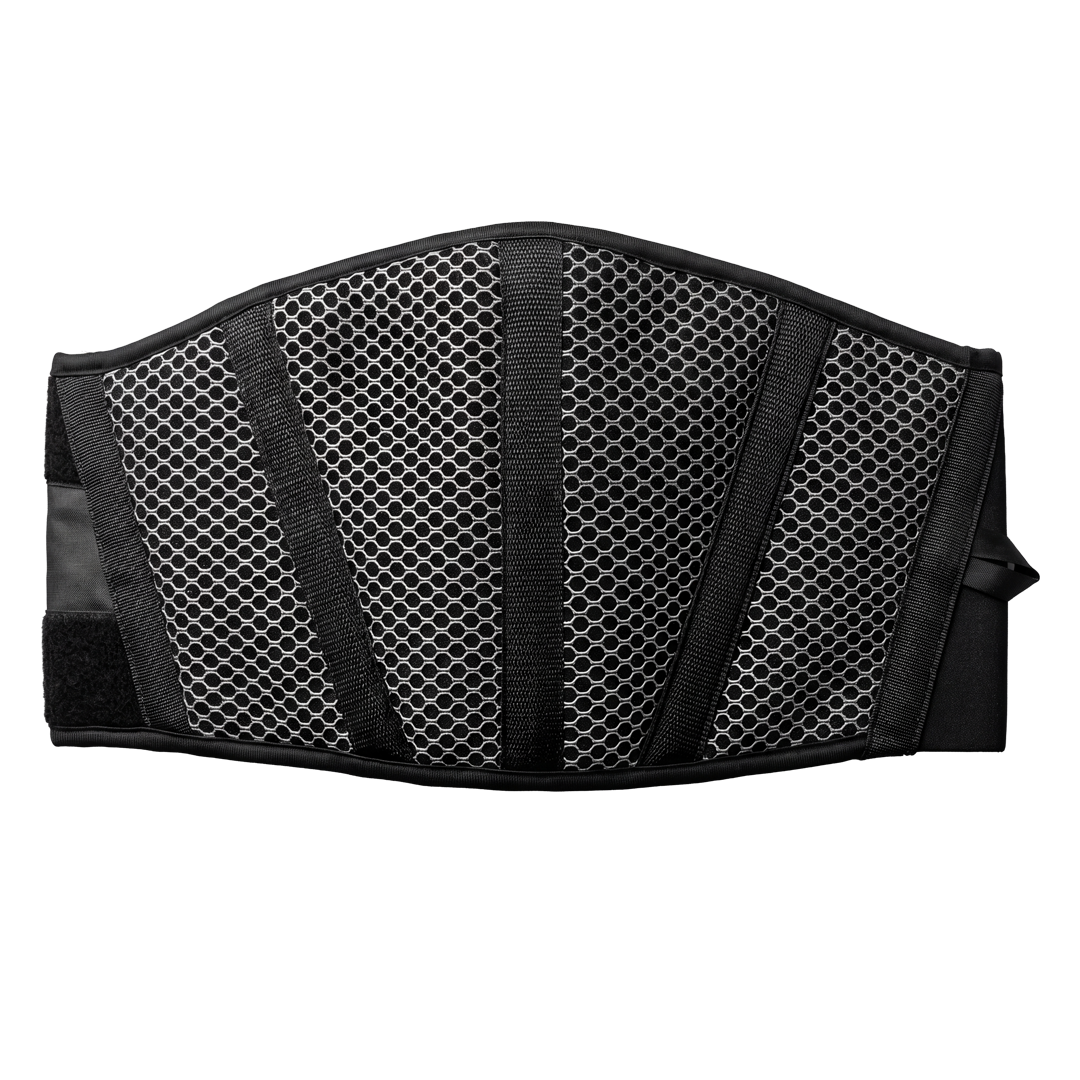
This is still one of the most practical benefits. Cold air finds its way into the gap between jacket and pants, especially in a forward-leaning position. A belt closes that gap and adds a layer over the lower back. Designs with wind-resistant panels, such as a windproof mesh lumbar kidney belt, are built around this purpose.
A Physical Reminder of Posture
The steady pressure of a belt keeps the rider aware of the lower back. Some riders say this makes them notice when they slump in the seat. It is a reminder, not a correction. The belt doesn’t hold your spine in a particular position, and a rider who sits badly will usually keep doing so with a belt on.
Causes of Lower Back Strain on a Motorcycle
Before deciding whether a belt will help, look at why the lower back gets tired. The cause often sits somewhere other than the back.
| Common cause | Can a kidney belt help? |
|---|---|
| Riding position and bike setup | No. Only adjusting the bike or changing bikes addresses this. |
| Long stretches without breaks | Partly. It may make long stints feel more comfortable, but breaks matter more. |
| Vibration and rough surfaces | Partly. Compression can make constant movement feel less tiring. |
| Cold air and wind | Yes. This is where a belt is most clearly useful. |
| Gear that restricts or drags | No. Better-fitting gear is the fix. |
| An existing back condition | No. This needs a healthcare professional. |
Riding Position and Bike Setup
Handlebar reach, footpeg position and seat shape decide how the rider’s weight is carried. A sport bike’s forward lean and a cruiser’s feet-forward stance each load the lower back differently. A belt can’t change that geometry.
If the strain appears on every ride regardless of distance, setup is the first thing to check.
Time in the Saddle and Constant Vibration
Holding one position for hours over constant vibration tires most riders. Regular stops, stretching and changing position on the bike help more than any accessory.
A belt can make the hours between stops feel more comfortable.
Gear That Works Against the Rider
Several gear problems can add to lower back strain: a jacket that is too short in the back, pants that pull when seated, or a heavy backpack.
Matching gear to the type of riding you actually do often solves more than adding a belt.
What Kidney Belts Can’t Do
Most rider disappointment comes from the gap between what kidney belts do and what some listings claim.
They Aren’t Lower Back Pain Help in the Medical Sense
If you’re searching for lower back pain help, a kidney belt is not treatment. It doesn’t address the cause of pain, and wearing one shouldn’t delay getting advice.
- back pain is persistent or getting worse;
- you notice numbness, weakness or pain spreading into the legs;
- you’ve had a crash or a hard impact, especially if you see blood in your urine. Get checked promptly.
They Aren’t Certified Back Protection
Padding is not the same as tested impact protection. A standard kidney belt is not built or tested to absorb crash energy. Even a heavily padded one should only be treated as protective if that specific product comes with test documentation to a recognized standard.
Riders who want impact protection for the spine need purpose-built motorcycle back protectors. The two can be worn together where the designs allow.
When a Kidney Belt for Motorcycle Riding Makes Sense
A kidney belt is most worthwhile when the riding conditions play to its strengths:
- Long touring days, where compression and coverage make extended stints more comfortable.
- Off-road and adventure riding, where the rider moves constantly between sitting and standing. Many riders like the secure feel around the midsection, provided the belt stays in place.
- Cool, windy or early-morning riding, where the extra layer over the lower back is noticeable.
- Riders who simply prefer the feel, which is a perfectly good reason on its own.
For short trips in hot weather, many riders find a belt adds heat without much benefit. A breathable mesh motorcycle kidney belt reduces that trade-off but doesn’t remove it.
Why Fit Decides Whether a Kidney Belt Works
When riders say a kidney belt “doesn’t work,” fit is the most common reason. A belt that is too loose slides up toward the ribs or rotates, so the support panel ends up in the wrong place. One that is too tight restricts breathing and becomes something to remove at the next stop.
Measure around the waist at the height where the belt will sit, in inches or centimeters. Compare the measurement with that brand’s own size chart, since sizing varies between manufacturers. Adjustable closures help a belt stay put as the riding position changes. A dual-strap lumbar support kidney belt, for example, gives two adjustment points rather than one.
A belt that fits properly should feel firm when you first fasten it and still allow a full breath. It should also stay in the same place after you stand on the pegs or lean forward.
What This Means for Brands and Retailers Selling Kidney Belts
Riders asking “do kidney belts really help” also read product pages and compare the promise with the ride. Overstated claims lead to returns, poor reviews and lost trust. In some markets, wording that implies medical benefit or protective performance can also bring regulatory obligations. Check your claims for each market you sell into.
Writing Product Claims That Hold Up
“Protects your kidneys” and “protects internal organs” are easy to write and hard to support. Leave them out unless you have evidence.
Claims That Are Easier to Support
Describe what the belt is and what it does. Useful points include:
- adjustable compression and lumbar coverage;
- a wind-resistant layer, if the fabric is windproof;
- reflective details, if they are fitted;
- breathable mesh;
- closure type and size range.
These are accurate, specific and still persuasive.
Protection and Performance Claims
Avoid “impact protection,” “absorbs vibration” or certification marks unless you hold test reports or certificates. They must apply to that exact product and the market where it is sold.
Pain and Injury Wording
“Prevents lower back strain,” “relieves back pain” and “prevents injury” read as health promises. Riders with real back problems may rely on them, which is a risk for both the rider and the seller.
Product Features That Change How Well a Belt Works
Whether riders keep wearing a belt or abandon it usually comes down to a few details:
- The width and shape of the rear panel
- How well the elastic holds its tension over time
- How securely the closures grip
- How much heat the materials trap
- Whether edges dig in when seated
Material choices are worth discussing early through material expertise and integration. Wear-testing samples through prototyping and design consultation shows how a design behaves in a riding position. It’s also worth asking a supplier how elastic tension, stitching and closures are checked during quality assurance and testing, so later batches match the approved sample.
Sourcing Kidney Belts for Your Range
Province Sports is a factory-direct motorcycle gear manufacturer in Sialkot, Pakistan, and kidney belts are its best-selling program. The wholesale motorcycle kidney belts range covers mesh, reflective, windproof, padded and leather-look styles. These are available for OEM, private label and white label orders, with sample sets for approval before bulk production. Many new brands start with kidney belts and gloves, then widen the range later.
If you’re building a kidney belt line, request a quote with your tech pack, reference sample or target market. Ask for samples so your team can test the fit before committing to bulk.
Frequently Asked Questions
Can a kidney belt relieve back strain after a long ride?+
Some riders find a belt makes a long ride feel more comfortable while they’re wearing it, but it isn’t a way to relieve back strain once it has set in. Rest, regular breaks during the ride and checking your riding position are more effective. Persistent pain is worth discussing with a healthcare professional.
Do kidney belts help with rider fatigue?+
They may help some riders feel less tired around the midsection on long or rough rides, mainly through compression and by blocking cold air. Rider fatigue has many causes, including dehydration, cold, noise and riding position. A belt is one small factor rather than a solution.
Is a kidney belt the same as a back brace?+
No. A kidney belt is a riding accessory designed for comfort, warmth and support while on the bike. Medical back braces and lumbar supports are a separate category, usually chosen with guidance from a healthcare professional for a specific condition.
Can wearing a kidney belt weaken your back muscles?+
This concern comes up often. A belt worn only while riding is a different situation from bracing all day, but there isn’t good riding-specific evidence either way. If you have a back condition or are concerned, ask a doctor or physical therapist.
Why does my kidney belt keep riding up?+
It’s usually too loose, the wrong size for your waist, or a shape that doesn’t suit your build. Re-measure at belt height, tighten the closure while seated in your riding position, and consider a design with a second adjustment strap.
The Bottom Line
Kidney belts work as a comfort and support layer, not as treatment or certified protection. Riders get the most from one when it fits and suits the conditions. Brands sell them best when the claims match what riders feel.