This guide compares the two for real riding: warmth, helmet fit, visor fogging, convenience and materials. It also covers neck tubes, bib-style neck warmers and storm caps, and how the right choice changes between riders in North America, Europe, the Middle East, Asia and Australia. For the rest of your cold-weather kit, see our guide to winter motorcycle gear.
Quick Answer: Balaclava or Neck Gaiter?
- Choose a balaclava for cold, long or high-speed rides in a full-face helmet. It covers the head, ears, neck and most of the face in one layer.
- Choose a neck gaiter for milder weather, short trips with frequent stops, or open-face helmets. It covers the neck and lower face and is quick to adjust.
- Wear both on the coldest days: a thin balaclava under the helmet and a neck warmer over the collar.
Neither one protects you in a crash. Both are comfort and weather layers, not protective gear.
What Is a Motorcycle Balaclava?
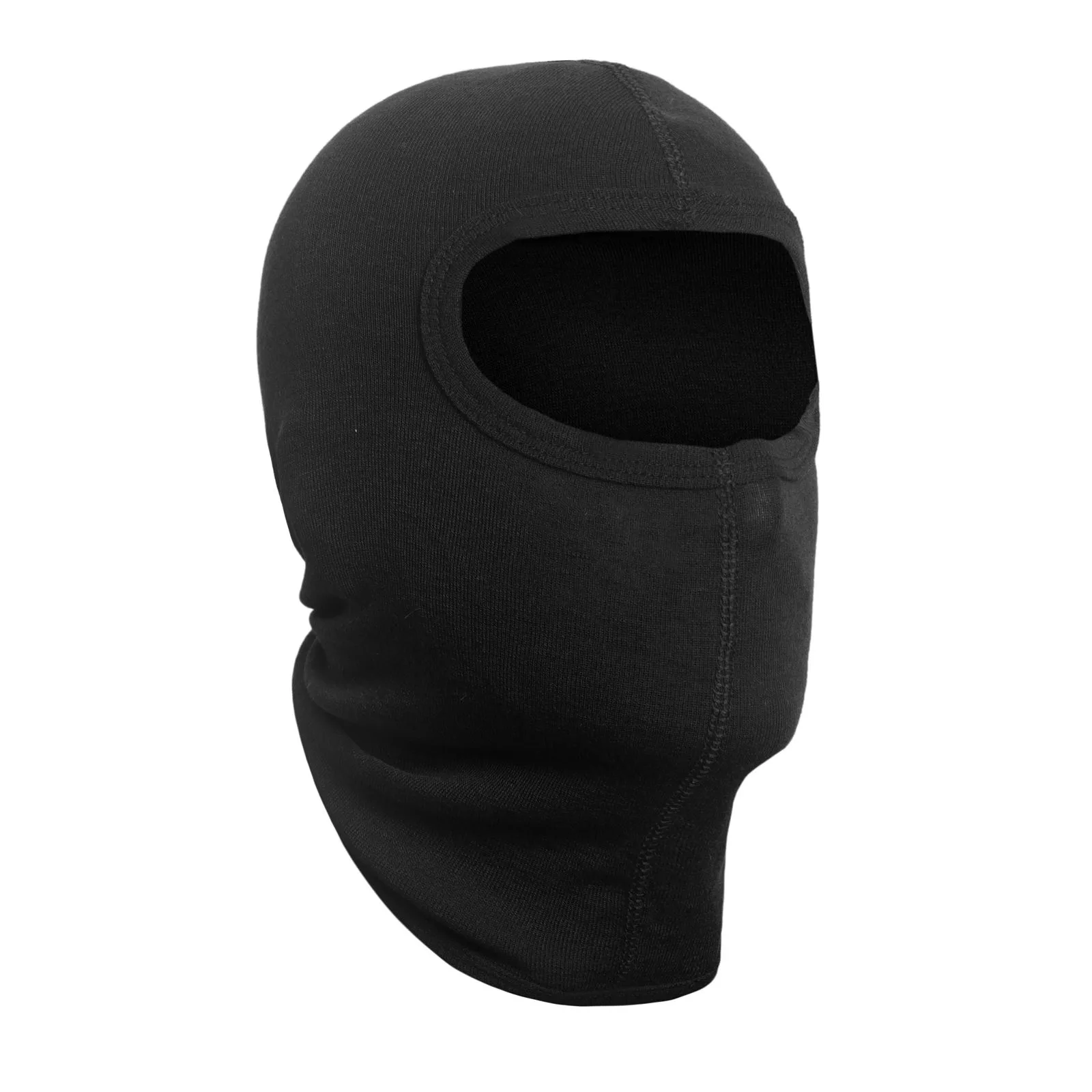
A motorcycle balaclava is a close-fitting hood worn under the helmet. It covers the scalp, ears, neck and usually the lower face, leaving an opening for the eyes or the whole face. Because it sits under the helmet, it stays in place at speed and fills the small gaps where wind gets in.
Balaclava, Storm Cap or Helmet Liner?
You’ll see these names used for similar products:
- Storm cap is a common trade name for a motorcycle balaclava, especially thermal or wind-blocking versions.
- Helmet liner usually means a thin skull cap or balaclava worn mainly to manage sweat and keep the helmet lining clean.
Our range of motorcycle storm caps and balaclavas covers both thermal and lighter styles.
What Is a Neck Gaiter for Motorcycle Riding?
A neck gaiter for motorcycle riding is a band of fabric worn around the neck. Most can be pulled up over the chin, mouth and nose when needed, then pushed down again at a stop. It leaves the top and sides of the head uncovered.
Neck Tube vs Bib-Style Neck Warmer
There are three common styles:
- A neck tube is a simple stretch tube that pulls over the head.
- A bib-style neck warmer has a longer front and back panel that tucks inside the jacket collar, often with a zip, so it seals the collar more fully. A fleece mock-turtleneck bib is one example.
- A half mask extends the neck warmer up over more of the lower face for cold wind, as on a neoprene and fleece half-mask neck warmer.
Balaclava vs Neck Gaiter: Side-by-Side Comparison
| Feature | Balaclava | Neck gaiter |
|---|---|---|
| Head and ear coverage | Yes | No |
| Neck coverage | Yes | Yes |
| Lower face coverage | Yes | Yes, adjustable |
| Cold-weather warmth | Higher | Good at the neck |
| Effect on helmet fit | Adds a thin layer | Little on the scalp; can bunch at the jaw |
| Adjusting at stops | Helmet off | Quick, helmet on |
| Sweat barrier for helmet liner | Yes | Limited |
| Best for | Cold, long, high-speed rides | Mild weather, short trips, open-face helmets |
How They Compare on the Road
Warmth and Wind
A balaclava gives the most complete protection, because one layer covers the head, ears, neck and face. A neck gaiter seals the collar gap well but leaves your scalp and ears relying on the helmet lining. On cold highway rides, that difference is easy to feel. Knowing how to stay warm on a motorcycle starts with sealing gaps like this one.
Helmet Fit
Anything worn under a helmet must not change how it fits.
- A balaclava: A thin balaclava for motorcycle helmet use usually fits without a problem, but a thick one can loosen the fit or create pressure points. Look for thin fabric and flat seams, and make sure the chin strap fastens cleanly over it.
- A neck gaiter: It adds little on the scalp, but loose fabric pulled up over the face can bunch around the jaw under a full-face helmet.
If you’re unsure, check your helmet maker’s guidance on wearing anything underneath.
Visor Fogging
Any fabric over your nose and mouth can direct warm breath up onto the visor. A well-fitted balaclava with a breathable mouth area, or a gaiter worn just below the nose, reduces this. An anti-fog insert or treatment helps with either.
Convenience at Stops
A neck gaiter wins here. You can pull it down at a fuel stop or traffic light without taking your helmet off. A balaclava stays put until the helmet comes off, which suits long stints between stops better than stop-start commuting.
Sweat and Hygiene
A balaclava keeps sweat and hair oils off the helmet lining, which many riders value year round. A gaiter covers less, so the helmet lining still absorbs sweat from your scalp. Both are easy to wash, which is simpler than cleaning a helmet lining.
Neck Warmer vs Balaclava: Matching Your Helmet
Your helmet type often settles the neck warmer vs balaclava question:
- Full-face helmets: A thin balaclava works well. If you don’t want anything on your head, a bib-style neck warmer worn outside the helmet is a good alternative.
- Modular helmets: Either works. A balaclava keeps your face covered when the chin bar is open.
- Open-face and off-road helmets with goggles: A neck gaiter or half mask is usually easier, because it can be adjusted around the goggles and lowered when you stop.
Materials and Construction: What to Look For
Fabric Choices
Cold-Weather Fabrics
Brushed Fleece
Fleece is soft, warm and breathable, and it’s common in thermal balaclavas and bib neck warmers. A stretch thermal balaclava keeps the warmth of fleece in a thin, close-fitting cut.
Wind-Blocking Panels
Fleece alone lets wind through. Some styles add a wind-blocking panel at the front of the neck or face, where the wind hits hardest, and keep breathable fabric elsewhere.
Neoprene
Neoprene blocks wind well and holds its shape, so it suits half masks and zip-up neck warmers. It breathes less than fleece, which makes it better for cold days than mild ones.
Warm-Weather Fabrics
Thin stretch synthetics and mesh panels move sweat away and dry quickly. They suit summer helmet liners, and gaiters worn against dust and sun.
Fleece and neoprene trap warm air in a similar way to other insulation. Our explainer on what Thinsulate is explains how insulation works.
Construction Details
Whichever you choose, look for:
- flat seams that won’t press under the helmet;
- a face opening that stays in place and doesn’t drift into your vision;
- enough length at the neck to tuck inside your jacket collar;
- a zip or adjuster on bib styles, for a closer seal.
Which Should You Choose?
- Winter commuters: A neck gaiter or bib for frequent stops, plus a thin balaclava on the coldest days.
- Long-distance winter riders: A thin balaclava, with a bib-style neck warmer for extra wind protection.
- Adventure and off-road riders: A breathable gaiter or half mask that works with goggles and handles dust.
- Hot-climate riders: A thin, breathable helmet liner for sweat, or a light gaiter for sun and dust.
Your hands usually feel the cold first. Our guide on how to keep your hands warm on a motorcycle covers that part of your winter riding gear.
Balaclava or Neck Gaiter by Climate and Market
- Canada and the northern US: Deep cold favors a thermal balaclava with a neck warmer on long rides.
- The UK and Northern Europe: Damp, windy cold suits a thin balaclava or a windproof bib that keeps rain off the neck.
- Southern Europe, southern Australia and New Zealand: Milder winters often need only a neck tube or light bib.
- The Middle East: Cold mornings, desert nights and dust make a light gaiter or half mask useful year round.
- Asia: Northern winters call for full cold weather riding gear, while hot, humid regions favor thin, breathable liners and gaiters.
For Dealers and Brands: Stocking Balaclavas and Neck Warmers
Balaclavas, storm caps and motorcycle neck warmers are practical add-ons for any winter range. They usually come in one adjustable size, so they need little sizing stock, and they work across many markets. Clubs and dealers often order them with printed or embroidered logos as branded merchandise.
Describe them accurately:
- call a product “windproof” only where it has a wind-blocking fabric or panel;
- avoid suggesting any protective benefit.
Province Sports manufactures storm caps, balaclavas and neck warmers for OEM and private label buyers. To plan a range, request a quote with your styles, branding and target markets.
Frequently Asked Questions
Can I wear a balaclava and a neck gaiter together?+
Yes. A thin balaclava under the helmet and a neck warmer or bib over the collar is one of the warmest combinations for very cold rides. Check that the helmet still fits properly and that nothing bunches under the chin strap.
Do I need a bigger helmet to wear a balaclava?+
Usually not, if the balaclava is thin. Try your helmet on with it before a long ride. If the helmet feels tight or shifts, switch to a thinner balaclava or a neck warmer rather than changing helmet size.
Can a neck gaiter replace a balaclava in winter?+
For short rides in mild cold, often yes. On long, cold or high-speed rides, a gaiter leaves your scalp and ears exposed to drafts, so a balaclava is warmer.
Is a balaclava useful in summer?+
A thin, breathable one can be. It absorbs sweat before it reaches the helmet lining, though some riders find any full head covering too warm in high heat.
Do balaclavas or neck gaiters offer crash protection?+
No. They’re comfort and weather layers only, and they don’t replace your helmet, jacket or other protective gear.
Final Thoughts
There’s no single winner in the balaclava vs neck gaiter debate. A balaclava gives the most complete warmth and keeps your helmet lining clean. A neck gaiter is lighter, quicker to adjust, and better suited to open-face helmets and stop-start riding. Choose by your weather, your helmet and the way you ride. On the coldest days, wear both.